Denmark Should Be On Your Bucket List
after almost 2 weeks in the country, I kinda want to be Danish now…

Welcome to my Denmark digital travel journal 🫶 It’s a long post, with many other posts embedded within that dive deeper into side topics, so feel free to jump around or just save this for later. Without further ado, let me share my trip to Denmark!
In July 2025, my husband and I had a friends’ wedding in Prague, Czech Republic. As most people who live in America do when they go to a destination wedding in Europe, we decided to turn it into a European vacation! Denmark was chosen because (1) it was the hottest part of the summer in Italy (our first choice country) and we would’ve fried alive, (2) we had friends in Copenhagen, and (3) my social media feed had fed me so much enticing Copenhagen content up until that point that you didn’t have to twist my arm to go check it out myself.
My husband and I are what I like to term “deep explorers”—we enjoy experiencing as much of a city/country/area when we visit as we can, versus bopping around to tourist landmarks across several countries with only 1-2 days in each—which is why we dedicated a full 1.5 weeks to Denmark and the various cities in and around its islands.
We’re also budget travelers who prioritize good food over a luxurious hotel stay, experiences over physical souvenirs, and urban tourism over backpacking/camping. I hope this guide shows how approachable Denmark can be, and why it should be on your bucket list 😉
table of contents
logistics // all the not-so-fun prep for travel that you gotta do if you want your trip to be smooth!
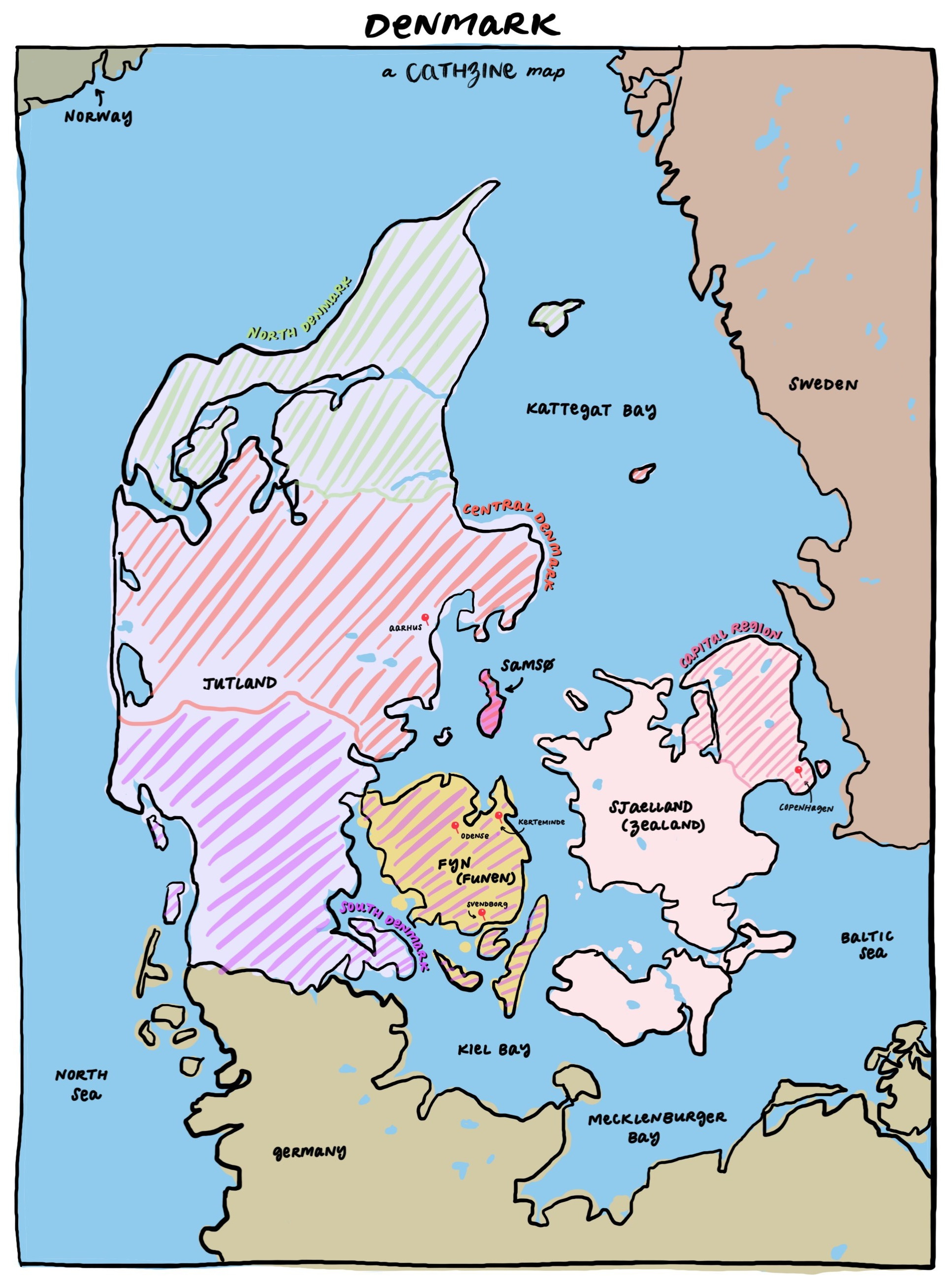
map // I’m 1000% a visual person, so of course I’ve got to provide a map! Same old disclaimer—this is my creative interpretation and not to scale
itinerary // sharing goals/ways to bucket destinations into days, versus exactly what I did on each day; I’ll have all of my lists linked so you can pick and choose what sounds interesting to you!
bucket list continued // other places and sights we had in mind during the planning of this trip that we weren’t able to go to this time but would highly consider for a future visit
final reflections // what surprised me, and lasting impressions & takeaways from the trip
other writings on Denmark // linking my Denmark-related articles in case you want to peruse some others ❤️
logistics
visa
At the time of travel, since we held American passports, we qualified for up to 90 days of stay in Denmark and the Czech Republic within any 180-day period without a visa. The European Travel information and Authorization System is requiring Americans to apply for ETIAS to travel to Denmark and the Czech Republic starting in 2026, so please check up on the visa rules when you visit to get the most updated policies. Sharing a couple of handy links:
List of ETIAS-required countries
Official ETIAS page for Denmark
currency
The majority of Denmark uses contactless payment, whether that be via a physical card or an e-wallet on your phone, so we didn’t bother getting a lot of cash. Since we didn’t have a credit card that wouldn’t incur a foreign transaction fee, we used Revolut—an e-banking app that makes exchanging currency extremely fast. A couple of tips with using the free version of Revolut:
you can perform a maximum of $1,000 fee-less currency exchanges per month; if you exceed this you’ll incur a 0.5% fee
transferring money from your bank can take up to 5 days
you can start exchanging money a couple of months in advance if you want to avoid the fee
technology
phone plans // we didn’t get any international roaming and just relied on free public Wi-Fi. On hindsight, I wouldn’t recommend this if you’re traveling between so many cities (and using public transit to get to each) as much as we did. It would’ve been a lot easier to be able to use data for things like purchasing bus/train tickets, making reservations, etc.
apps // there weren’t any specific-to-Denmark phone apps we had to/wanted to download to make our trip easier, but you could download their rideshare (GoMore, Viggo, etc.) and bikeshare (Bycyklen) apps! (Although, locals will be very annoyed at you if you don’t understand their biking traffic rules…I share more about this in the transportation section)
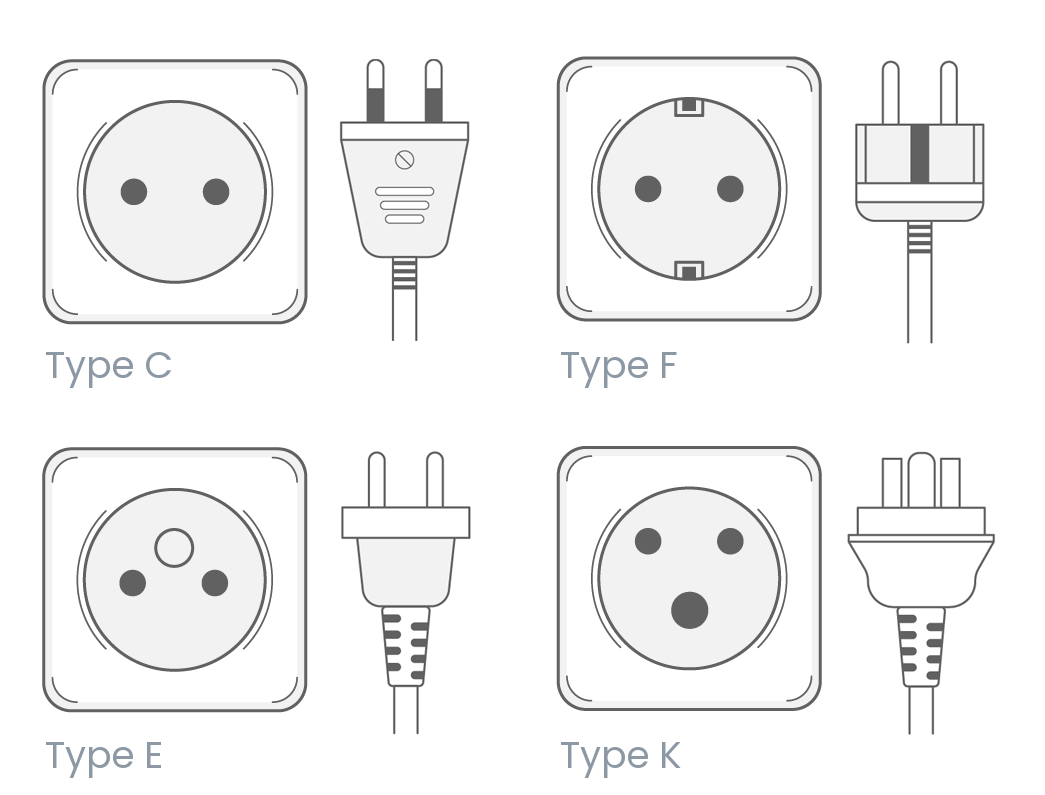
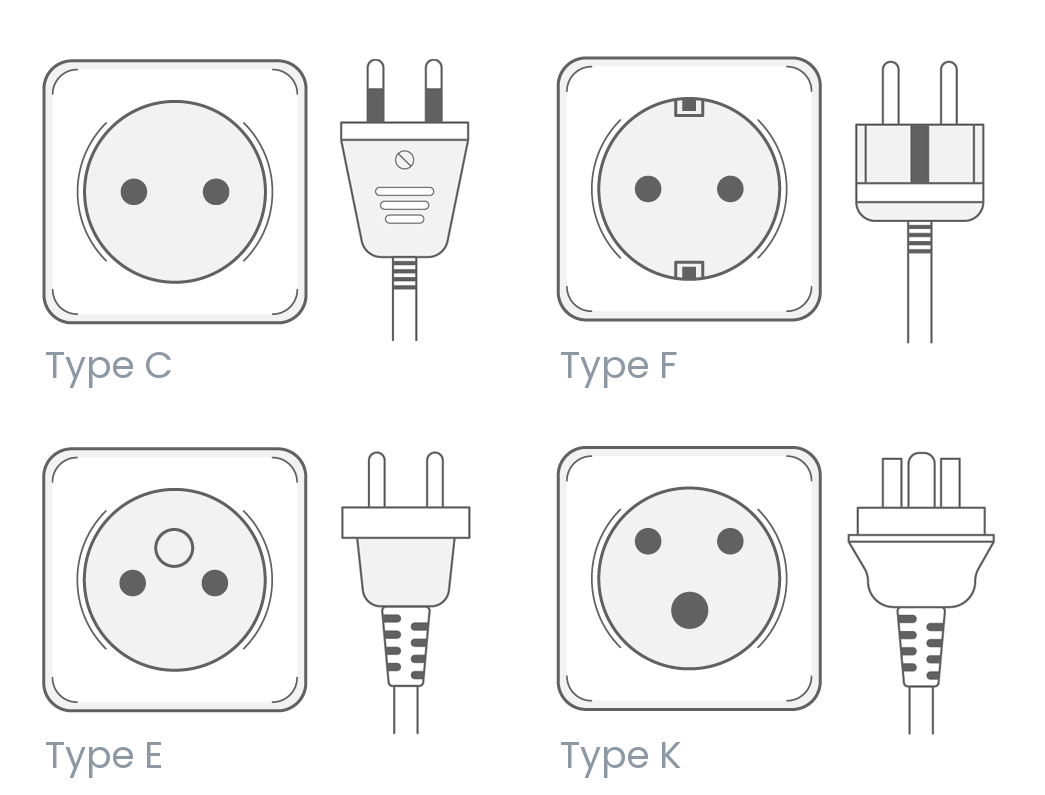
outlet converter // Denmark uses power outlets and plugs of types C, F, E, and K, but we only brought types C and E we didn’t run into any issues
transportation // we opted to not bike in the cities and just relied on walking, the subway/light rails, and the bus system. I know many sources romanticize the biking in Copenhagen, but my Danish friends shared the opposite perspective. For locals, it’s one of the most frustrating things to bike with tourists since tourists oftentimes don’t know the local biking etiquette and traffic laws, making it dangerous for both parties. Here are the transit options we used instead:
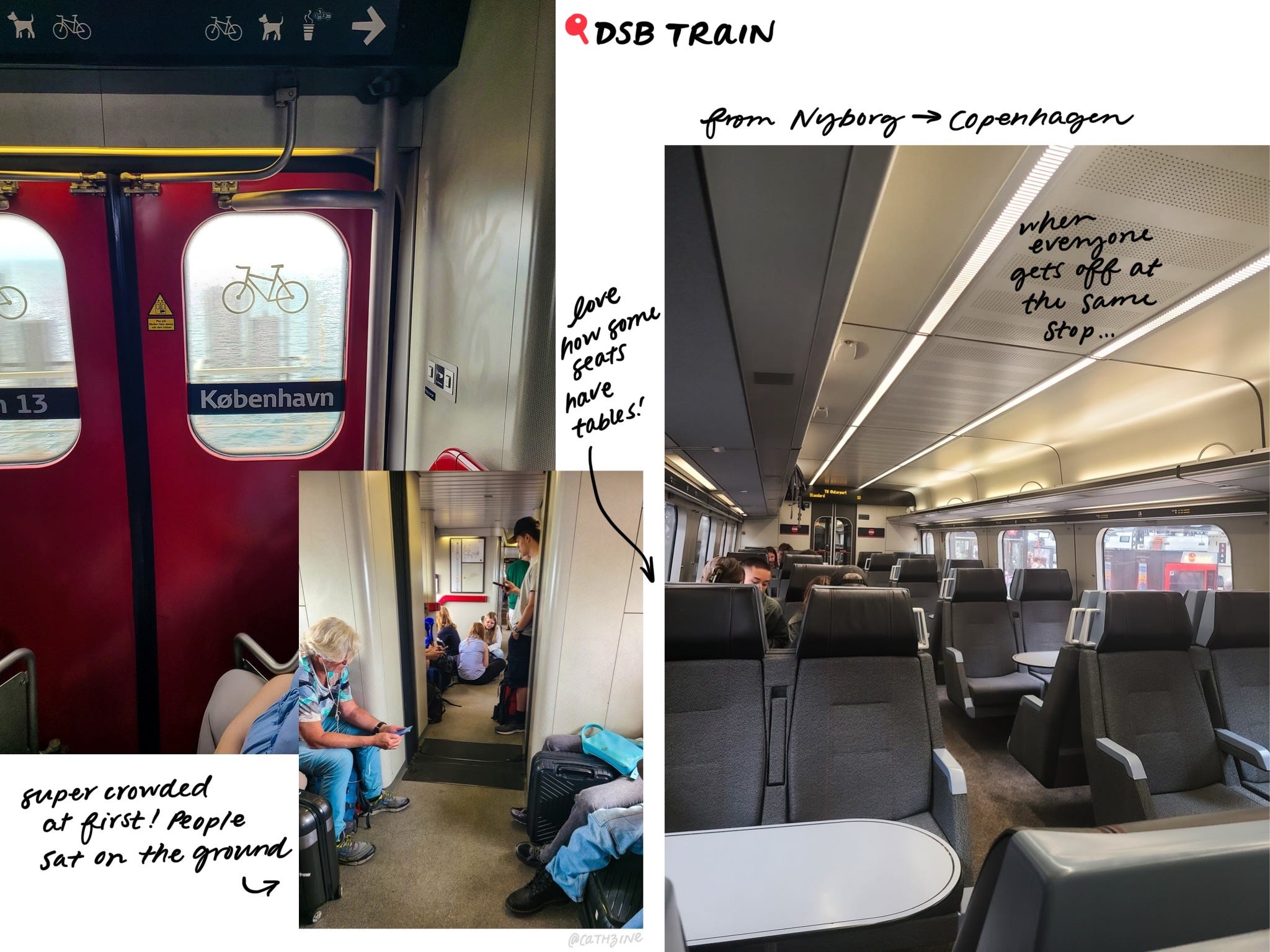
DSB Train // Denmark’s national train that takes you between cities and different regions of Denmark. We mainly used it to travel between Svendborg to Copenhagen, but it also provides direct routes to Copenhagen’s city zones 2+ and the airport. tips: even if you request a seat together with your party, oftentimes it’s a free-for-all like a subway unless you book First Class
Copenhagen Metro // Copenhagen’s subway system is on the smaller end of city metros, taking the shape of a circular wheel with spokes jutting out. It’s completely automated, and while there’s no kiosk/gate that forcibly checks your ticket prior to getting on, they do have security staff that will randomly investigate tickets (we saw this 3-5 times during our trip, so I don’t recommend going without a ticket)
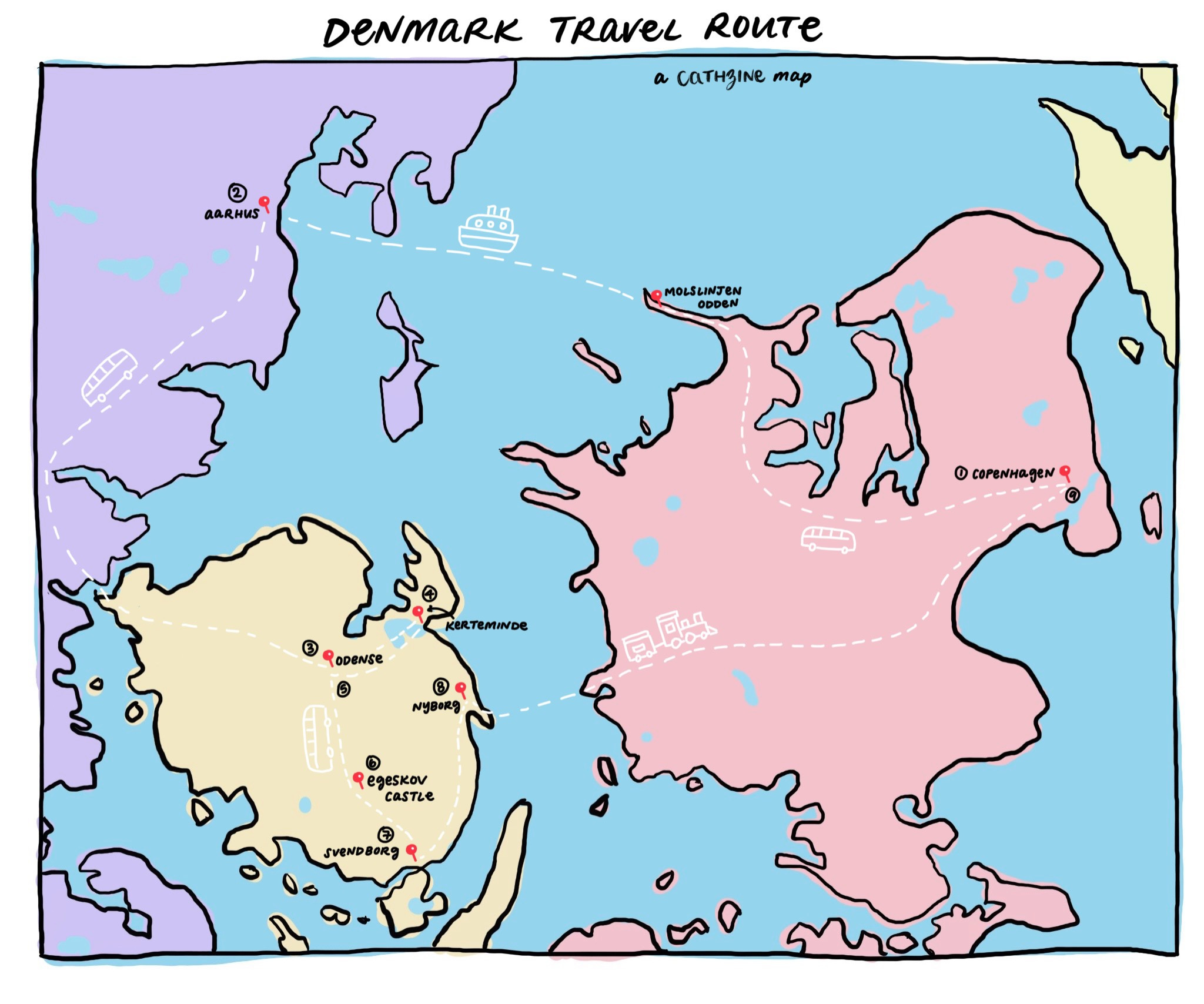
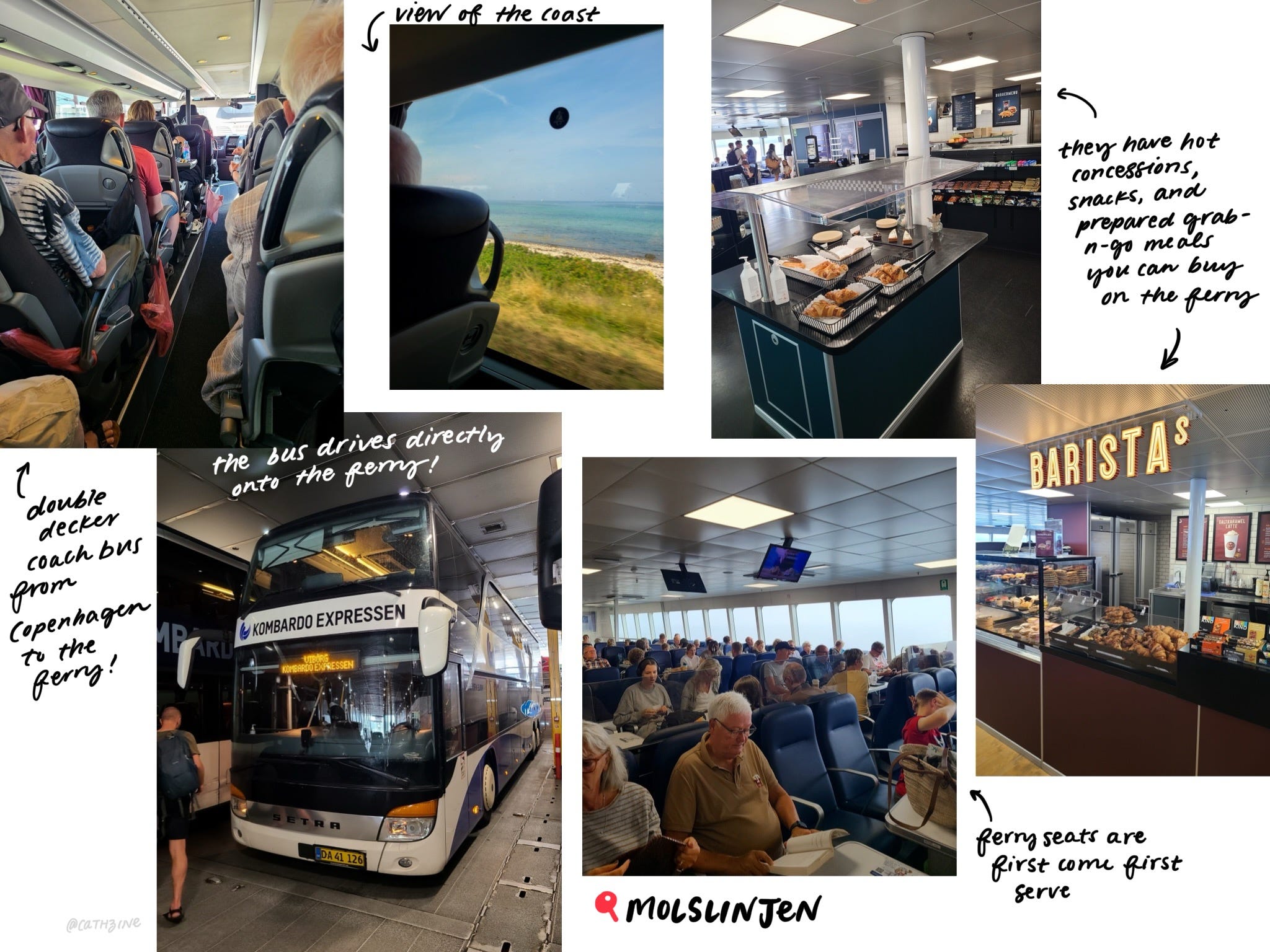
Kombardo Expressen // this company is part of the shipping company Molslinjen, Denmark’s largest domestic ferry company. I love that they offer public transport, providing bus + ferry routes to the other regions in Denmark, Sweden, and Germany. We used this to get from Copenhagen to Aarhus—the bus drives to Sjællands Odde gets directly onto the Molslinjen ferry to cross the Aarhus Bay to reach Aarhus.
FlixBus // a global transport company that provides routes in and between more than 40 countries and 4 continents (Greyhound, FlixTrain, etc.). This was a great option to take between the larger Danish cities, but we had to switch to the local FynBus when we were traveling between the smaller Danish towns. tips: buy tickets in advance so you can get a cheaper price.
FynBus // this is a bus system that only operates on Fyn (Funen), Langeland, and Southern Denmark. You can’t purchase tickets in advance, you’ll have to look for the timetables online, wait at the stop, and buy bus tickets as you board. p.s., they only take cash!
Walking // of course!
packing
Absolute essentials:
power bank // you’ll be using your phone a lot to navigate, take photos, etc.; you don’t want to be stuck without battery!
umbrella // there will be periodic bouts of rain (but these never lasted TOO long while we were there)
sun protection // the sun can actually get quite harsh in Denmark in the summers, I was using sun screen and my sun glasses all the time
walking shoes // many of the streets had worn cobblestones where flat-footed wear was essential if you wanted to walk long hours without hurting your ankles
enough clothes to not need to do too much laundry // there actually aren’t a lot of laundromats in the larger cities like Copenhagen and Aarhus; we were able to do our laundry at the hostel in Kerteminde and at our friends’ house. Or you can pay for dry cleaning service at the hotel but it is so expensive.
map
A mandatory hand drawn map by me, because using Google Maps just is a tad boring, isn’t it? 😘 Plus, I love knowing the different regions of a country, which I’ve added in for Denmark via shading!
itinerary
Here’s the map of our travel route in Denmark, with details to follow!
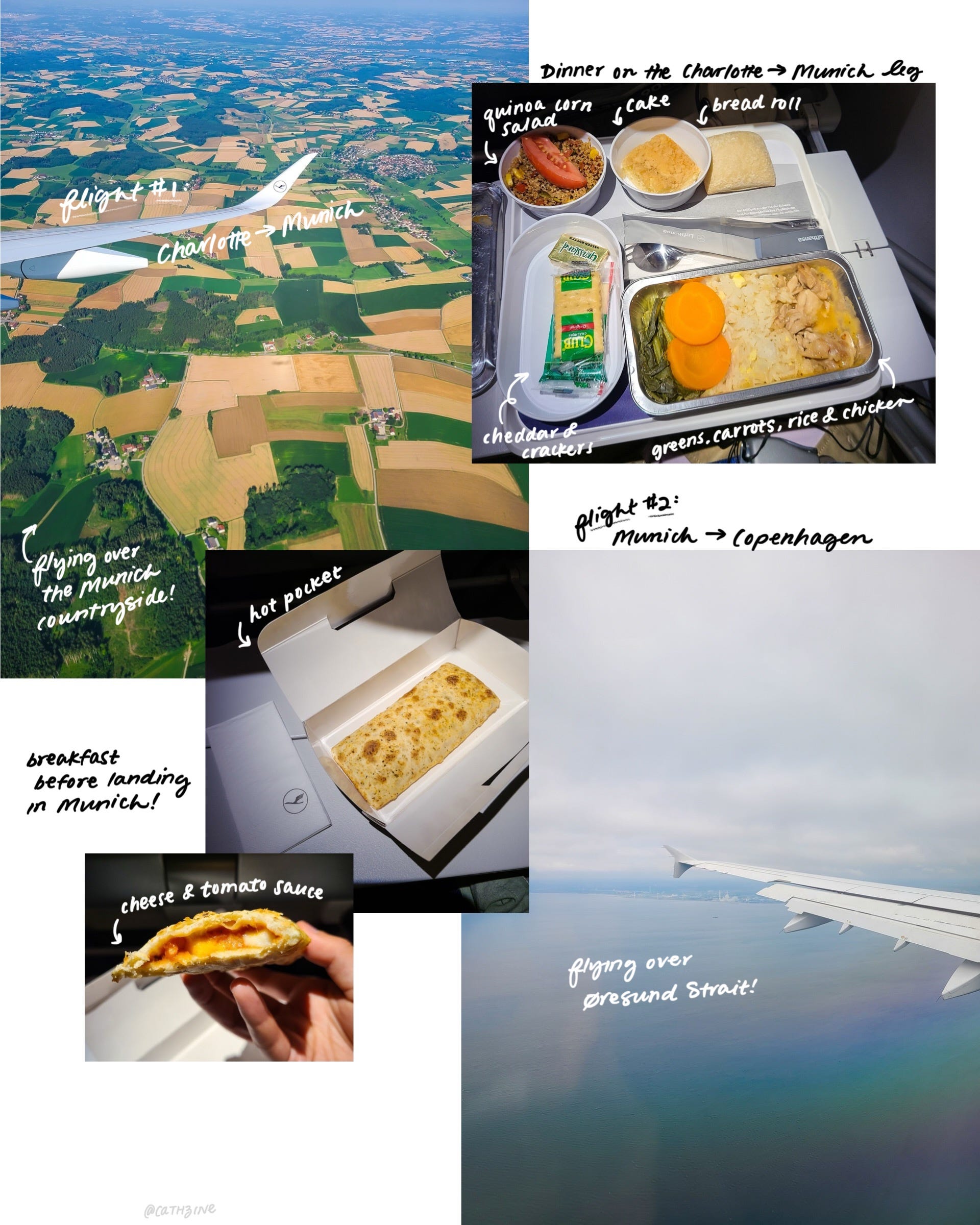
We flew on Lufthansa from Charlotte to Munich, then Munich to Copenhagen. On the Munich leg, we received a meal and a snack, the total flight was around 8 hours and 30 minutes long, with the Munich to Copenhagen leg being 1 hour and 30 minutes long (no snack!).
DAYS 1-4 // Copenhagen
Danish Name: København. Copenhagen, located on Sjælland (Zealand), is the capital of Denmark and oozes beautiful architecture (from modern libraries to royal palaces—they were awarded UNESCO-UIA-World Capital of Architecture), culture and history (preserved in its museums and alive on its streets), and sustainability. Many of the restaurants (of all price points) use organic ingredients, try to minimize their carbon footprint, and offer many vegetarian and vegan options. There are many other guides to traveling sustainably in Copenhagen, check it out if you’re interested! Overall, I loved the emphasis on community and wellness that I sensed in the culture here.
We spent 3 nights here and left the following morning to take the Kombardo Expressen bus & ferry to Aarhus. We chose to do this so that we could get our bearings after the flight, adjust to jet lag, etc. without also having to navigate Danish public transit between other cities. Sharing some of our main goals with the first 3 days:
Smørrebrød, Bolle med Ost, Cardamom Buns—trying authentic Danish smørrebrød, breakfast, and pastries to set our standards on what to expect for the rest of the trip. Where better to do so than in Copenhagen, the capital? If you haven’t already, check out my articles on these below:
Exploring the west coast of Amager Island—this is Denmark’s most densely populated island, located in the southeast part of Copenhagen across the canal. We started on Islands Brygge street, walked through Freetown Christiana and up to Refshaleøen to eat at Lille Bakery and check out Reffen Street Market
Nyhavn—I felt like it would be a crime not to see this iconic waterfront before we continued into the rest of our trip, so we squeezed it in as we explored the rest of the city
Any spare time we had between these 3 travel goals we sprinkled in other items that I’ve listed in my comprehensive Copenhagen post!
120 hours in Copenhagen
·
Here’s a list of what I did in the 5-ish days I spent in Copenhagen the summer of 2025 (and for context, yes, I’m a high-paced traveler—I try to milk my time for what its worth!). Including, but not limited to—my tips, recommendations, experiences, and a map 😉


🏠 hotel
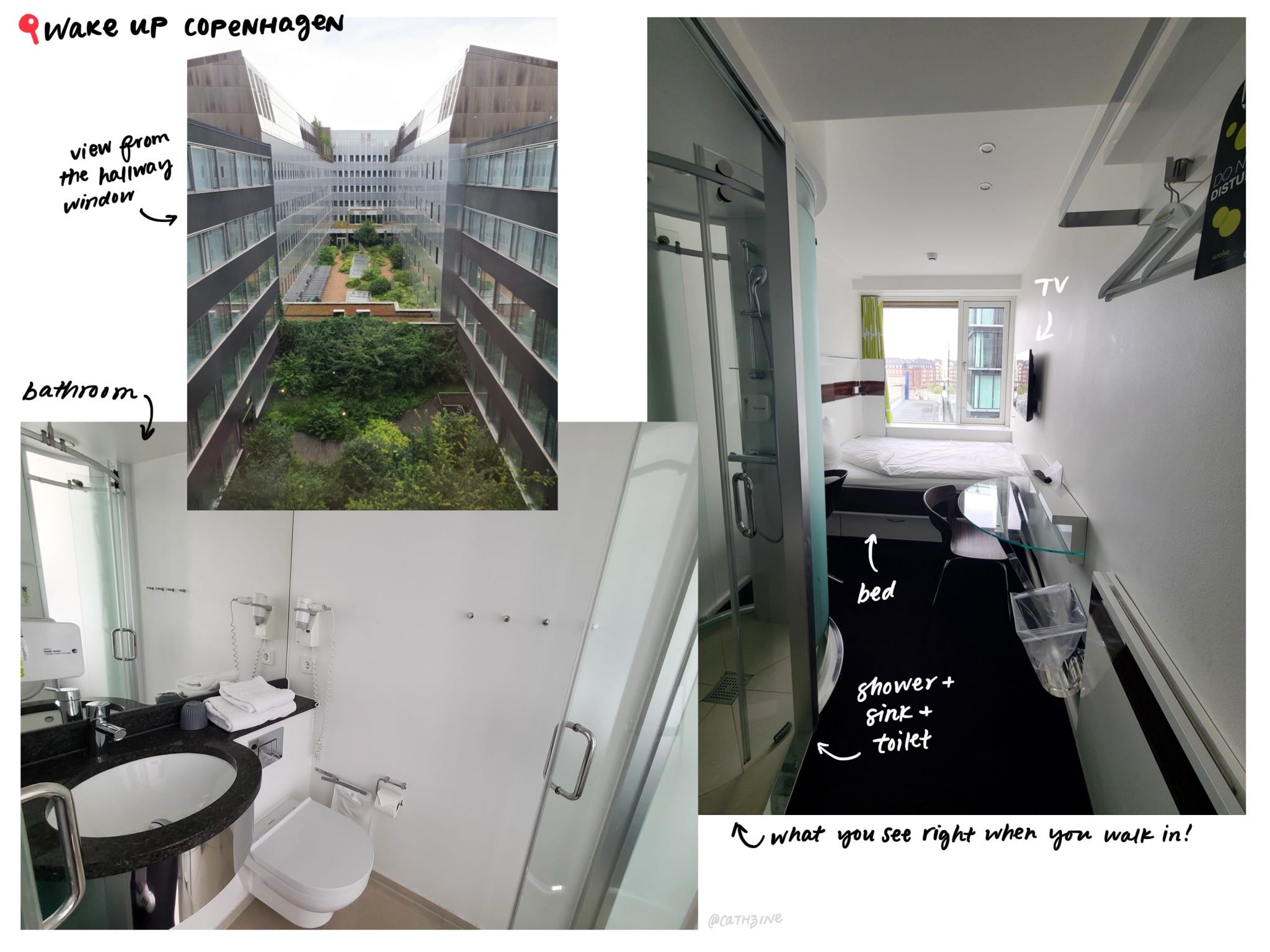
We stayed at Wakeup Copenhagen—address: Bernstorffsgade 35, Copenhagen, 1577 Denmark. It was a tight room, but we didn’t mind since we at least had our own private bath and the bed was very comfortable. note: you can leave your luggage here in their separate locker room downstairs, but you’ll have to pay for the locker! We kept our luggage in our room and made do with the lack of space.
🚌🚤 travel to Aarhus
We took the Kombardo Expressen to Aarhus on the morning of day 4 in Copenhagen. It was a little complicated trying to locate the bus itself at the station, but we managed to find the right one with seconds to spare 😵💫 The ferry was a very unique experience that I’d recommend! There’s a hot food concessions stand selling easy finger foods and also ready-made, refrigerated options. Many people came prepared with snacks or just bought fries to split (we brought food from Rug Bakery as we didn’t know what the situation would be like beforehand). There’s Wi-Fi and outlets on both the bus and ferry.
DAYS 4-7 // Aarhus
Danish Name: Aarhus (pronounced “Or-hoose”), but the spelling Århus was used between 1948-2011. Aarhus, located on Jutland, was originally a Viking settlement called Aros and is now the second largest city in Denmark (with the youngest population). Aarhus is like Copenhagen’s hipster sister, blending its Old World history (Latin Quarter, Viking Museum, Den Gamle By) with its young and modern energy (ARoS Art Museum, Infinite Bridge, etc.). Being active and in nature also feels like more a part of the culture in this city—more so than the other cities we visited in Denmark. It’s bustling but not as busy as Copenhagen (there is no subway system, just an overground rail), and has a great variety of food and beverage options, too.
We spent 3 nights in Aarhus, where we split up our days as follows:
City Walking—wandering the cobblestone streets without much of a destination; a great time to check out Latin Quarter, the waterfront, the city center, etc.
Traverse to Moesgaard Museum—since Moesgaard Museum is 30 minutes south of Aarhus, you can chunk out your day to spend it here, visit Marselisborg Castle, and see the Infinite Bridge on Ballehage Beach
Activities in Aarhus—ARoS Art Museum, canoeing on the River Aarhus, Den Gamle By, etc.
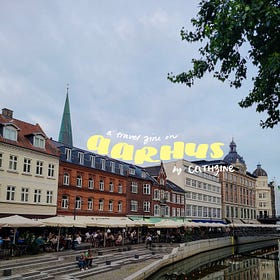
Details on specific places are linked in my Aarhus travel zine!
You Really Should Visit Aarhus
·
If Copenhagen is the celebrity everyone knows, Aarhus is the quietly humble, just-as-talented individual who may not always get the spotlight but has just as impressive of a résumé. I thoroughly enjoyed Aarhus’ hygge and restaurant scene, museums, and nature activities. Highly recommend you spend some time here when you’re visiting Denmark—and here’s my…

🏠 hotel
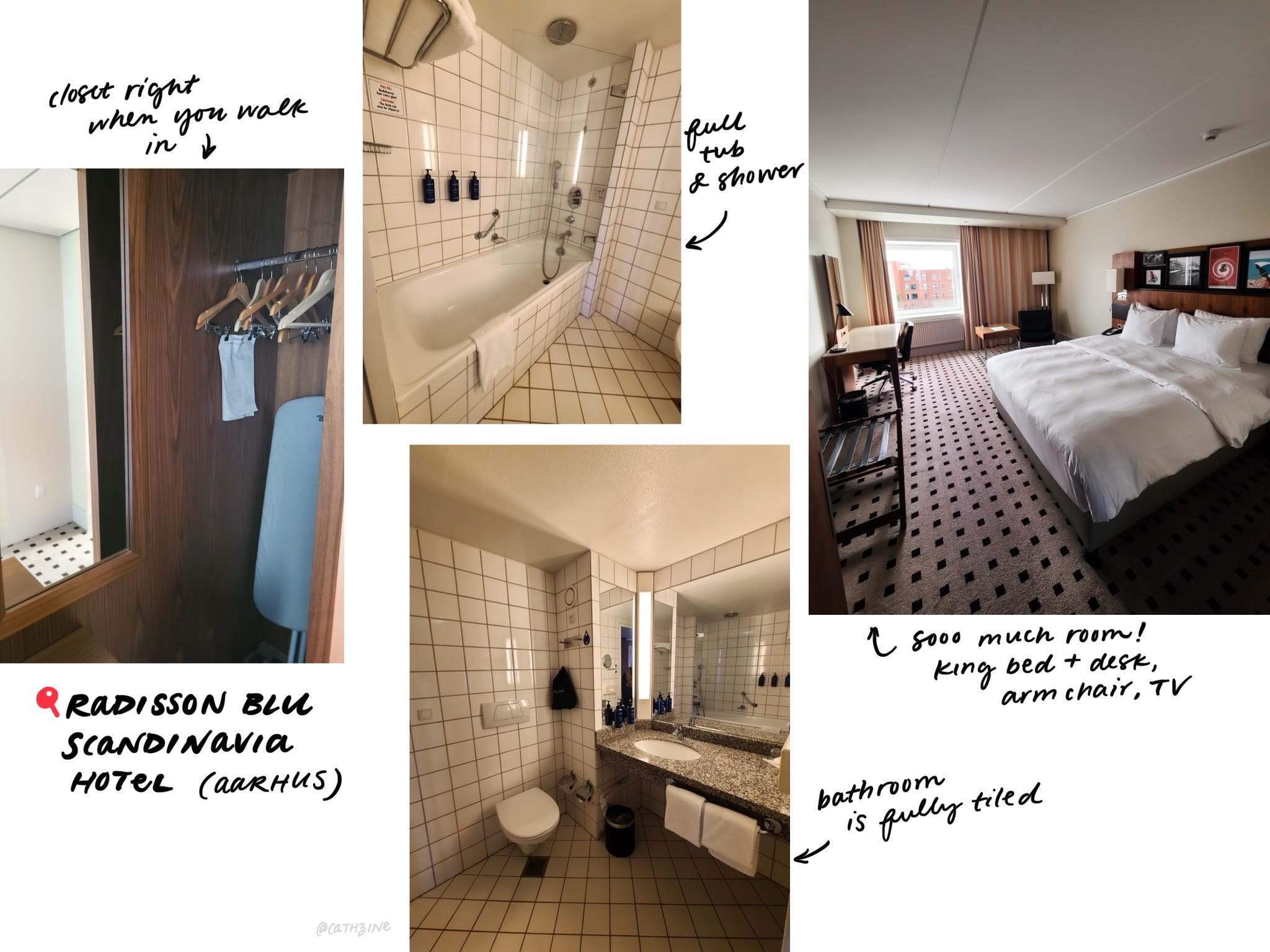
We stayed in Radisson Blu Scandinavia Hotel, address—Margrethepladsen 1 (Entrance from Thomas Jensens Allé 1), 8000 Aarhus, Denmark. It was the nicest hotel during our trip while still being at a similar price point to the ones we paid for in Copenhagen. We had ample room (it was bigger than most budget-friendly hotel rooms in the U.S. that I’ve stayed in 😂) and the location was stellar—right smack in the middle of Aarhus. It honestly felt like luxury and I couldn’t recommend it more!
🚌 travel to Kerteminde
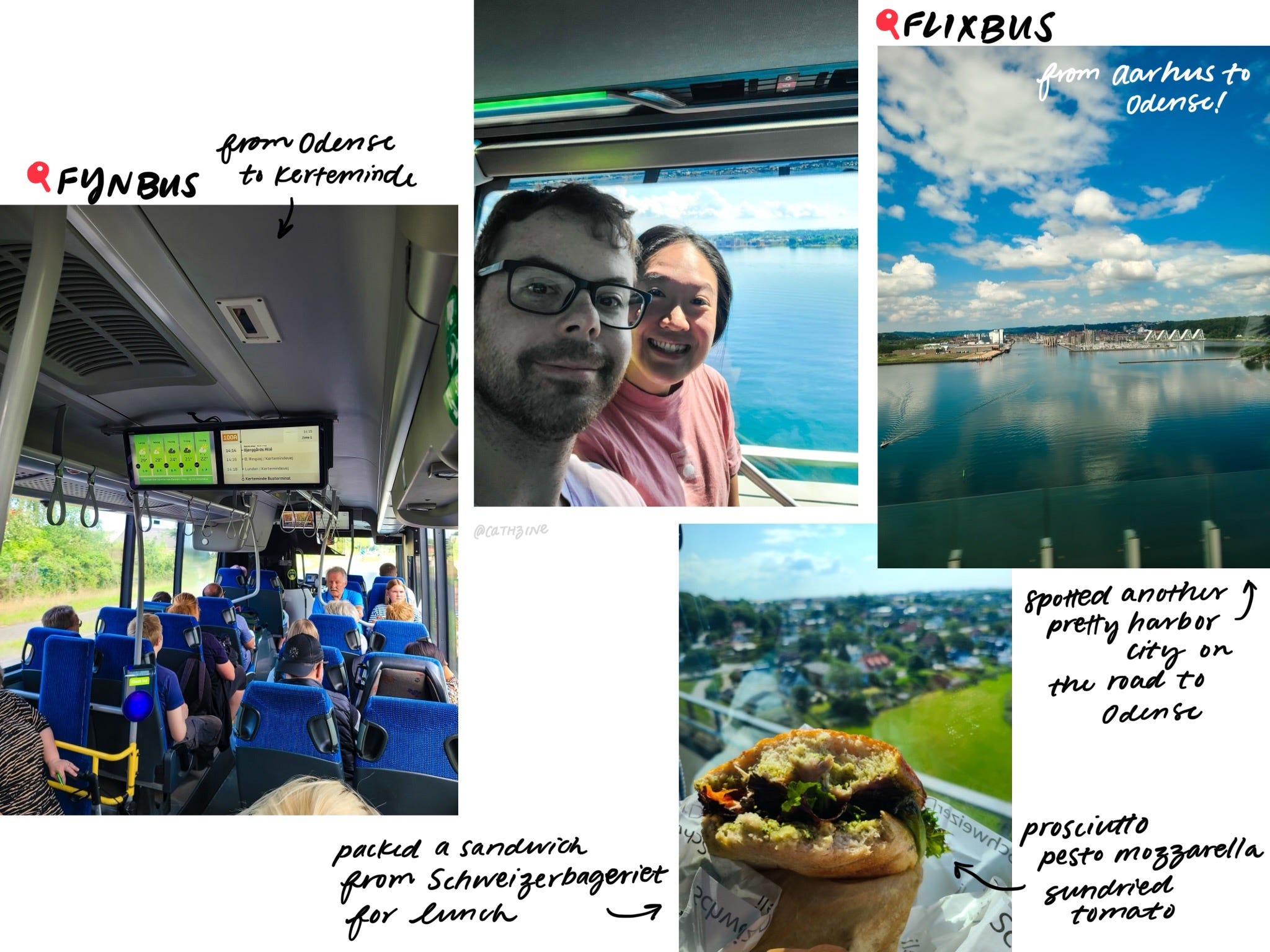
On the morning of the 7th day, we headed out for Kerteminde. Figuring out this leg of the trip was probably one of the most stressful 😅 it was difficult to tell how to ride the FynBus until we were able to ask someone at the Odense main station (we thought you could just hop on the FynBus from the station the FlixBus dropped us off at—not at all). Here’s what we did so hopefully it’ll be smoother for you!
Reserve your FlixBus ticket to ride from Aarhus to Odense
Get off in Odense and take Odense’s Light Rail (purchase tickets through their app) to the main station to purchase local FynBus tickets
Ride the FynBus to Kerteminde
DAYS 7-8 // Kerteminde
Danish Name: Kerteminde Kommune. Kerteminde is a coastal town on Funen that’s most known for its beaches and is touted to be the perfect place to escape and experience “true” Danish hygge. The town is monikered as “the Garden by the Sea” and offers many hiking routes, biking paths, fishing spots, as well as many access points to the water for kayaking and boating. Kerteminde also houses the Vikingmuseum Ladby which contains Denmark’s only ship grave from the Viking Age—the Ladby ship is said to have landed around the year 925!
We chose to visit Kerteminde because we wanted to experience a more classic beach in Denmark. While we didn’t stay long enough to hike/boat/fish/etc., we loved having a relaxing afternoon experiencing the center of town—via walking around the Kirsebærfestival (Cherry Festival)—and the North Beach. You honestly don’t need more than a day here unless you’re planning to take it slow and soak up more of the beach and nature.
Bopping Around the Danish Island of Funen

In the spirit of seeing a fuller picture of Denmark, we wanted to see a variety of towns and cities on Funen—the third largest island in the country. Here’s a collection of the places we went to during this leg of the trip! In case you missed the other parts of my Denmark excursion, check out the recap here:
🏠 hostel
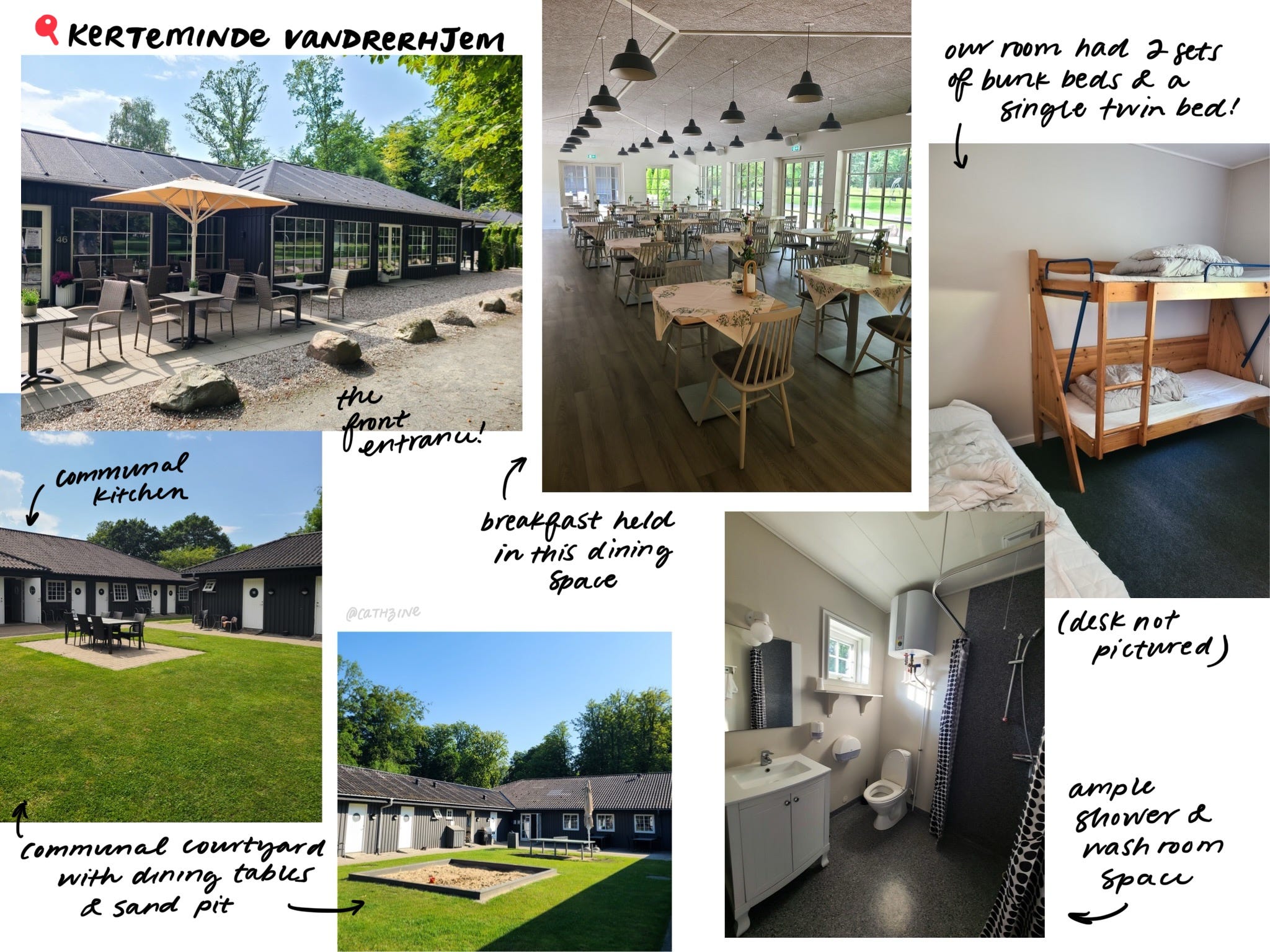
We stayed at Kerteminde Vandrerhjem, address: Skovvej 46, 5300 Kerteminde, Denmark. The rooms had a very quaint, cabin-like feel to them. Each room had its own private bathroom, and the cabins all faced a central grass courtyard where you could picnic. There was also a communal kitchen you could use to cook meals! Locationally, this wasn’t too far from central Kerteminde, about a 10 minute walk. It felt like the type of place locals frequented with families for a budget-friendly weekend beach trip. tip: bed linens aren’t included in the reservation price, so either bring your own or prepare for the upcharge.
🚌 travel to Odense
On the morning of the 8th day, we took the same FynBus route from Kerteminde back to Odense. We looked up the FynBus route times and just paid for tickets that morning with the bus driver!
DAYS 8-9 // Odense
Danish Name: Odense. This is Denmark’s third largest city (and Funen’s largest city) and is named after Odin, the chief god in Nordic mythology. In modern day, Odense is most known as the hometown of Hans Christian Andersen, the famous Danish fairytale author of the Ugly Duckling, the Little Mermaid, etc. It’s a very walkable city with both a light rail and bus system, so you can choose to get your steps in or take transit. There’s a wide variety of urban parks, harbor waterfront boardwalks, and city putzing you can do here depending on your preference.
Our main goal in Odense was to visit the H.C. Andersen museum, which didn’t take more than 2-3 hours. The rest of our time there was spent walking the city and soaking in the uniqueness that Odense offered versus the other Danish towns and cities we had already visited (we stumbled upon so many pretty pockets of greenery!). A day was enough for us, but I could totally see how people can spend more time here.
Bopping Around the Danish Island of Funen
In the spirit of seeing a fuller picture of Denmark, we wanted to see a variety of towns and cities on Funen—the third largest island in the country. Here’s a collection of the places we went to during this leg of the trip! In case you missed the other parts of my Denmark excursion, check out the recap here:
🏠 hostel
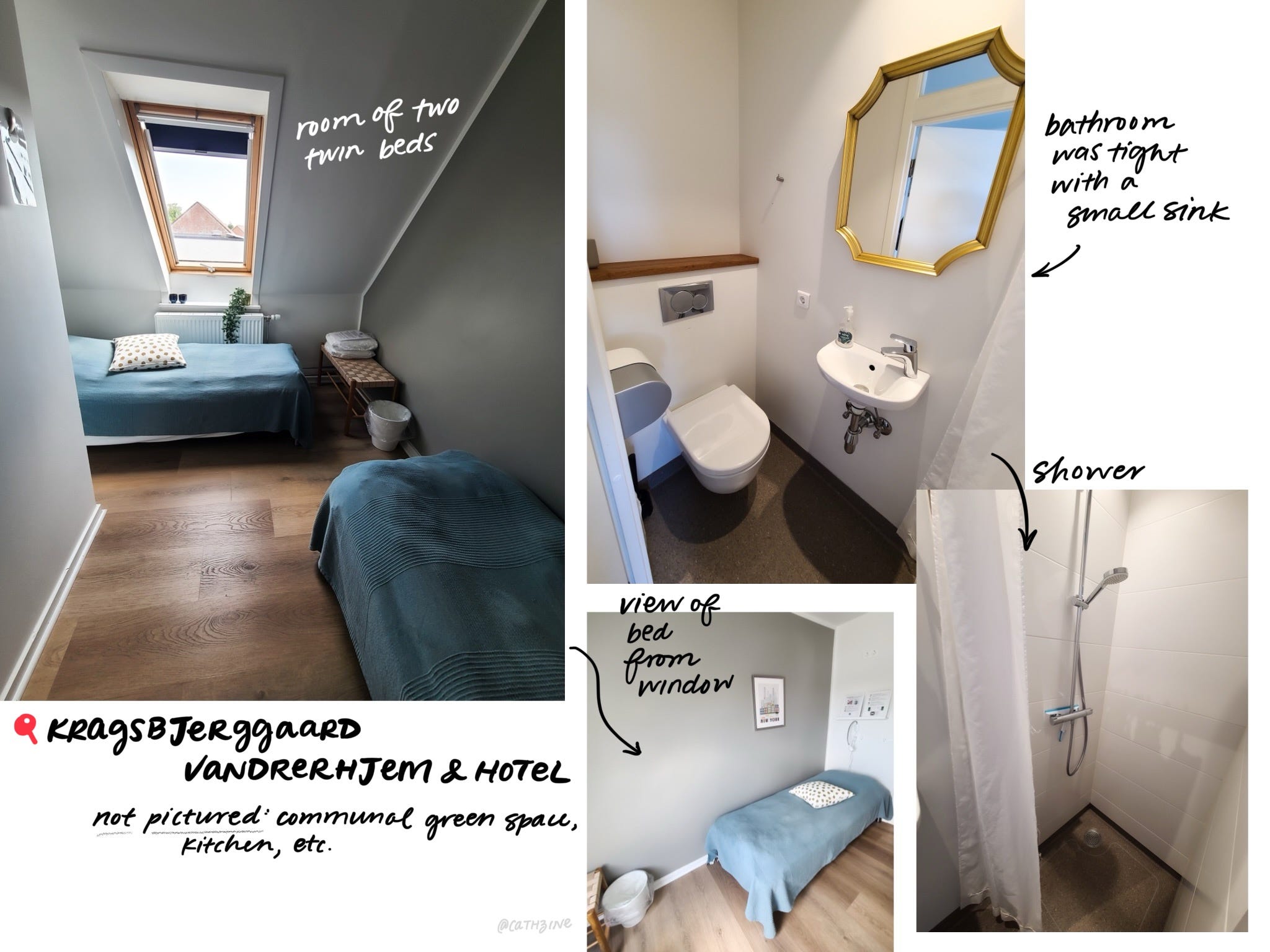
We stayed at Kragsbjerggaard Vandrerhjem & Hotel, address: Kragsbjergvej 121, 5230 Odense M, Denmark. It was very similar to our hostel experience in Kerteminde in that it had a central grass courtyard, a communal kitchen, and the individual rooms had private bathrooms. The staff were so friendly here—drawing us a map of where to find the Odense Light Rail, etc. We also were able to do laundry in this hostel, which was a life saver! tip: once again, bed linens aren’t included so prepare to rent or bring your own.
The only downside was it was further from Odense city center than we would’ve liked—this hostel was a 20 minute walk from the light rail, then you had to ride 2-3 stops to get into the center of Odense.
🚌 travel to Egeskov Castle
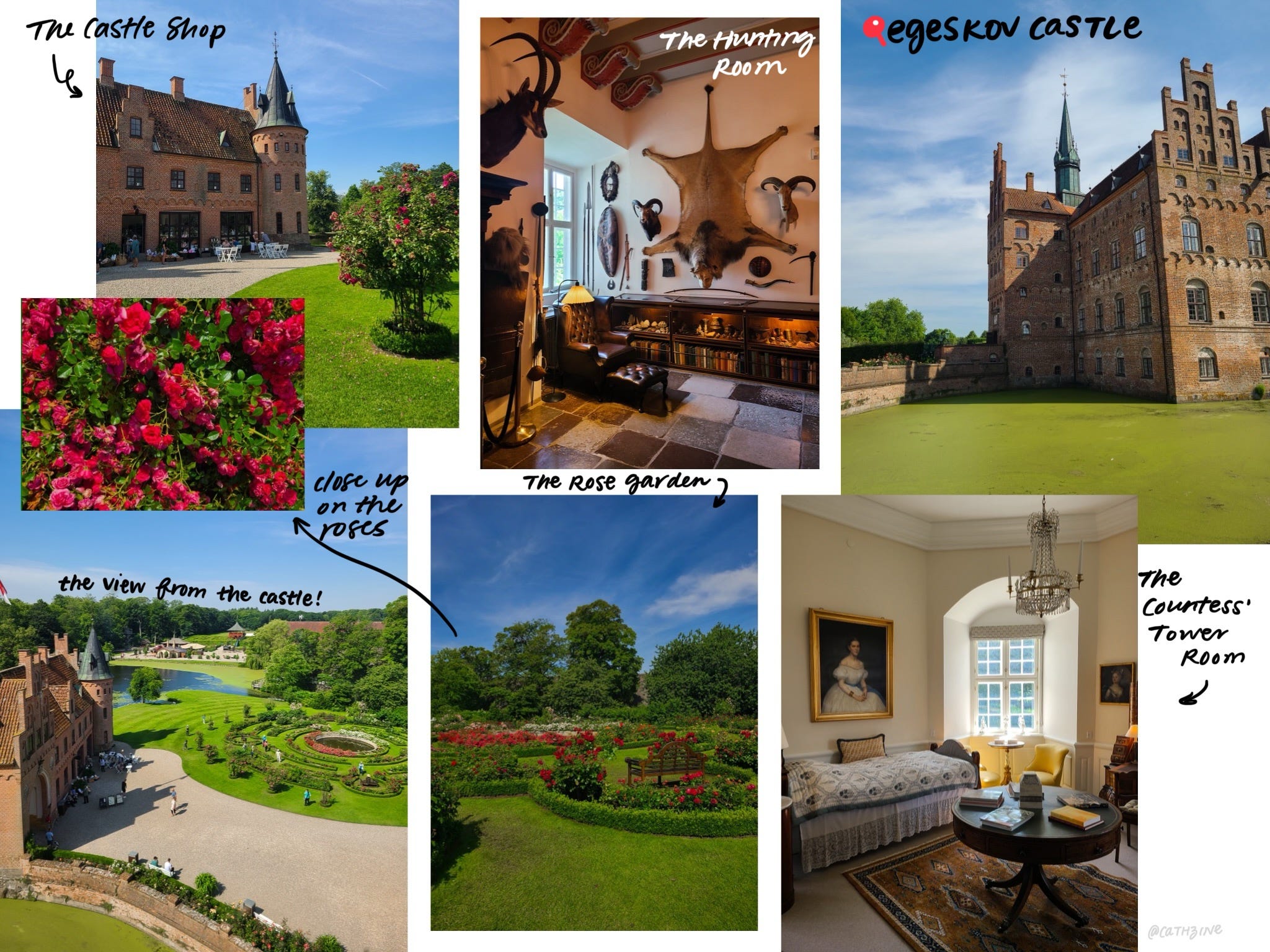
On the morning of the 9th day, we headed out towards Svendborg via a GoCollective bus (ticket pre-booked). Our route from Odense to Svendborg included a stop at Egeskov Castle, the most famous estate in Funen (located in Kværndrup)—sharing more on sightseeing Egeskov below 👇
🏰 explore Egeskov Castle
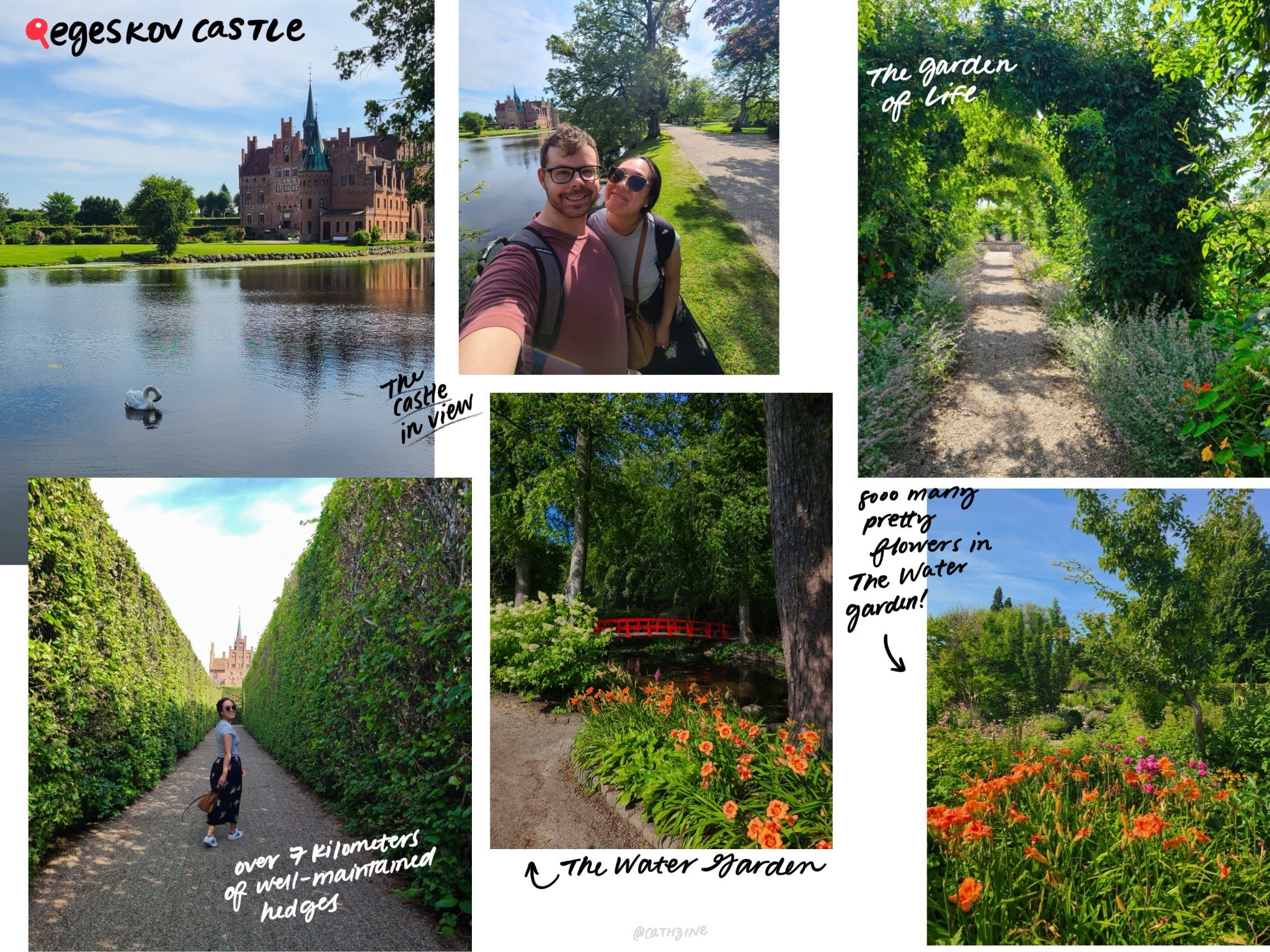
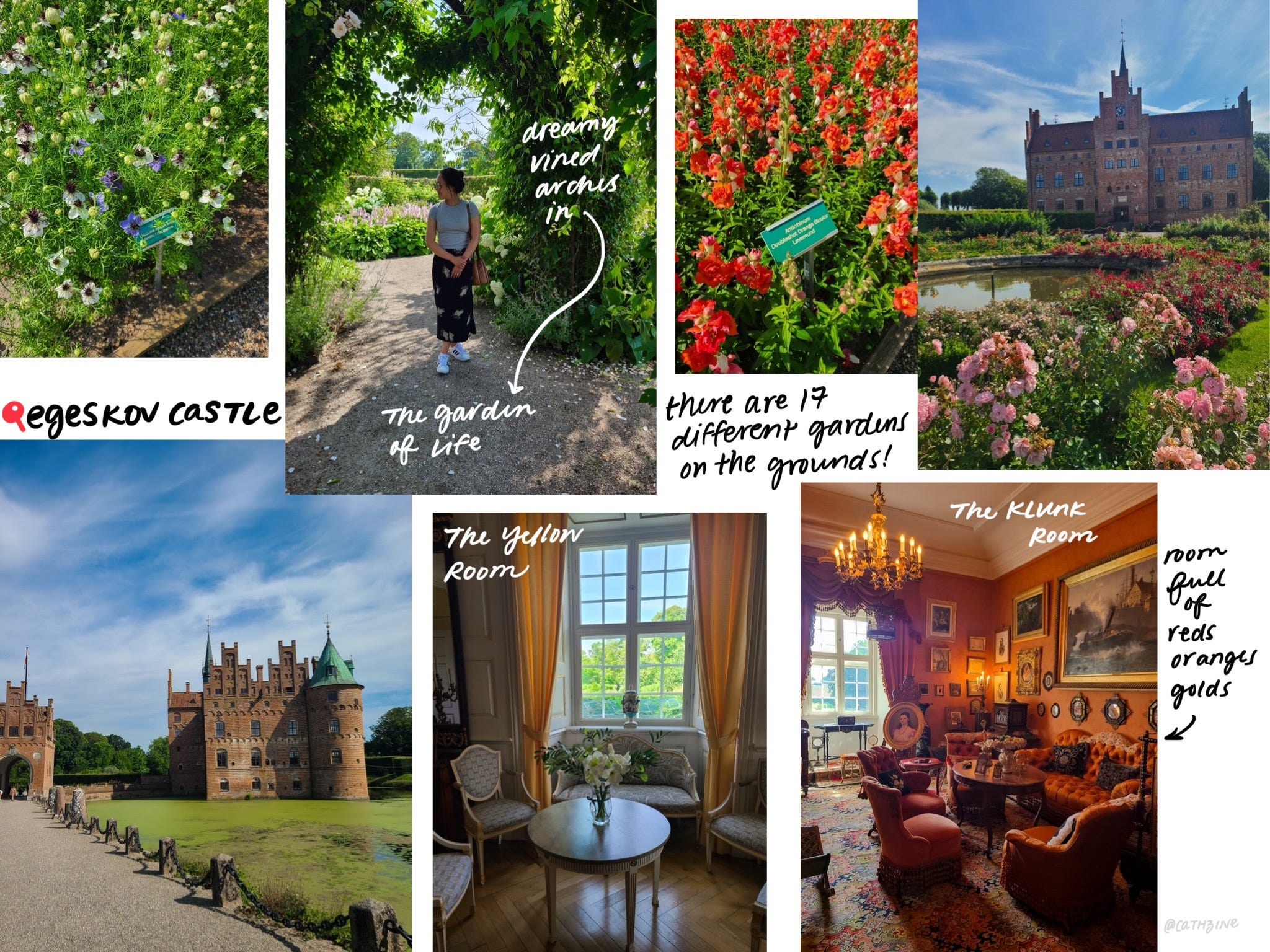
“Egeskov Castle” translates to “Oak Forest Castle” and is an estate that dates all the way back to the 1400s. Today, it’s part of a large public attraction with additional gardens, collections of vintage cars, farm tools, etc., shops and restaurants, and a large children’s playground. I couldn’t believe that the Egeskov Castle is actually still in use as a home to the Ahlefeldt-Laurvig-Bille family! (obviously that part wasn’t open to the public)
Tips: the castle itself didn’t take long to tour at all, so I see why a whole experience was created around it (to make it worth your trek). If you’re only looking to do the castle, this may not be worth the ticket price and cost of travel as there are many other castles you could visit in Denmark for at least half the price.
Also, you cannot store your luggage anywhere on-site!! We didn’t know this and had to lug our suitcases around everywhere. It’d be easiest to visit Egeskov without trying to move all of your belongings to another hostel later in the day, like we did…
Address: Egeskov Gade 22, 5772 Kværndrup, Denmark
🚌 travel to Svendborg
We planned for the castle to only take a couple of hours so we could head to Svendborg that afternoon, and even still we managed to see everything in the castle and the gardens before leaving. We took another GoCollective bus from the Egeskov Castle stop to Svendborg (another pre-booked ticket).
DAYS 9-10 // Svendborg
Danish Name: Svendborg Kommune. Svendborg is a much different coastal town than Kerteminde; there isn’t a beach within walking distance so Svendborg is more of a explore-the-docks-and-piers type. Founded in the 12th century, it’s also known as the most charming shopping town in all of Denmark since it doesn’t get as much attention as Copenhagen and Aarhus, but still is a quaint place to visit to get an authentic taste of Danish life. If you’re interested in exploring the islands south of Funen, Svendborg has many ferry options to take you!
By the time we reached Svendborg, we were quite tired from all of the back-to-back travel we had done on Funen Island. Svendborg ended up being a great town to unwind and take it easy—no major landmarks to hit, places to sightsee, restaurants to hunt down, etc. Our afternoon looked like this:
Stroll through Svendborg—there are many streets with cute boutiques, specialty stores, etc. that make for a relaxing putz
Explore Frederiksø—this is a mini island attached to the Svendborg Harbor via a walkway that used to be an old shipyard. Now it’s been revamped to have an outdoor street food market, a warehouse of vendors, a skate park, etc.
As always, visit the separate guide for details on Svendborg:
Bopping Around the Danish Island of Funen
In the spirit of seeing a fuller picture of Denmark, we wanted to see a variety of towns and cities on Funen—the third largest island in the country. Here’s a collection of the places we went to during this leg of the trip! In case you missed the other parts of my Denmark excursion, check out the recap here:
🏠 hostel
We stayed at Svendborg Cosy, address: Bregnegårdsvænget 14, 5700 Svendborg, Denmark. This was a hostel-Airbnb type situation where our host was a local but we had a shared bathroom and kitchen with multiple other guests. The room we had was spacious, but it wasn’t as convenient to not have our own private bathroom. Locationally, this was also further than we’d have liked from Svendborg Harbor (where the main bus station was), and the path from the harbor to the hostel was all uphill 🫠 I wouldn’t recommend this location for another stay, but it definitely was budget-friendly!
🚌 travel to Copenhagen
On the morning of day 10 we took a bus and the train back to Copenhagen. The train ticket was pre-booked and we purchased the FynBus tickets the morning of. The transit leg looked like this:
Fynbus from Svendborg to Nyborg Station
DSB Train from Nyborg Station to København H Station
DAYS 10 - 14 // Copenhagen
We arrived back in Copenhagen to spend the remaining 3-4 days of the trip. Since we had gotten a lot of the “iconic” Copenhagen items out of the way, we felt more relaxed to explore and soak in the artsy facets of Copenhagen. These couple of days looked like:
Museums—there are a lot of beautiful museums (both in their architecture, the collections they display, and the cafes they have) in Copenhagen. I mainly wanted to check out Designmuseum Danmark and the Glyptoteket, but wish I had time for so many others!
Architecture-hunting—when in the Architecture Capital of the World, one must soak up all of the interesting and pretty buildings. A couple of the ones on my list: Black Diamond Library, Grundtvigs Kirke, Rundetaarn
Venture to other neighborhoods—Copenhagen has many neighborhoods just a couple metro stops away from the city center that are so worth trekking to (either for a bakery, a cool street, etc.); more on them in my Copenhagen zine, but here are a couple I loved to get you started: Jægersborggade, Nørrebro area in general, and Nordhavn area
120 hours in Copenhagen
·Here’s a list of what I did in the 5-ish days I spent in Copenhagen the summer of 2025 (and for context, yes, I’m a high-paced traveler—I try to milk my time for what its worth!). Including, but not limited to—my tips, recommendations, experiences, and a map 😉
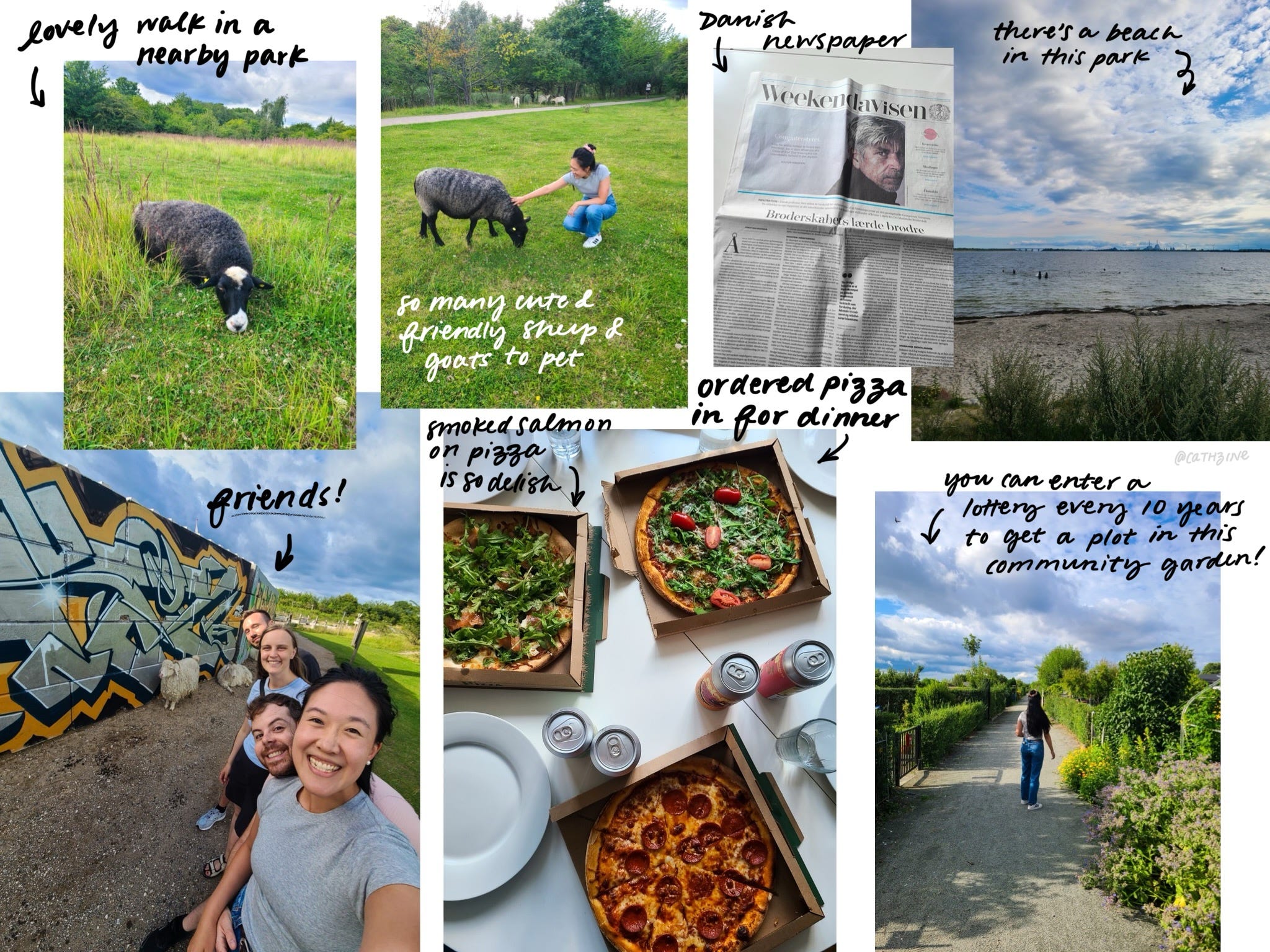
Be locals—we’re lucky to have friends who live in the city, so we were able to spend a day with them, see their neighborhood, and just experience “what locals do”. Another way to do this is by going to Folkehuset Absalon, a building always hosting community activities, and attending one of their events that interest you!
🏠 hotel
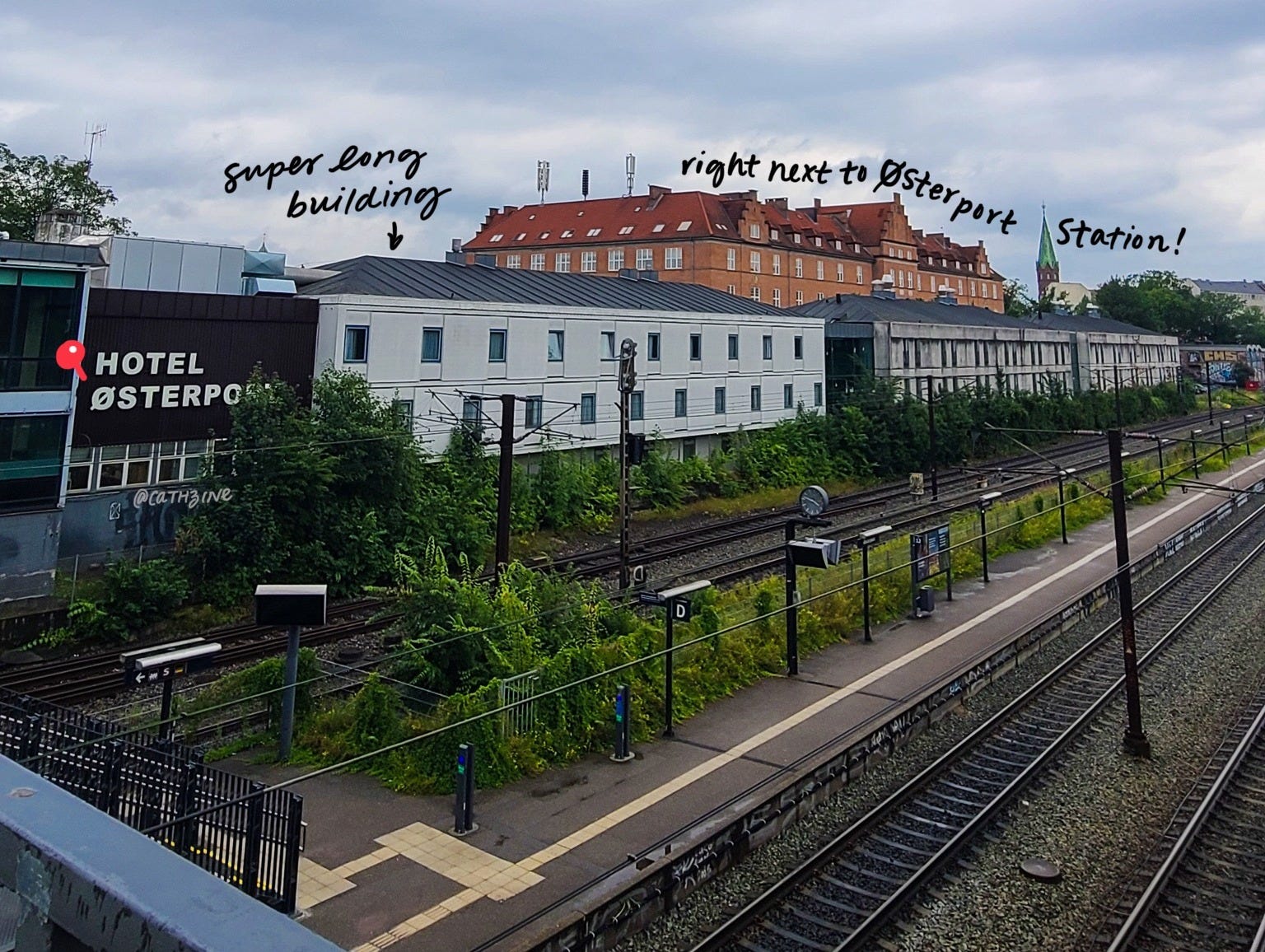
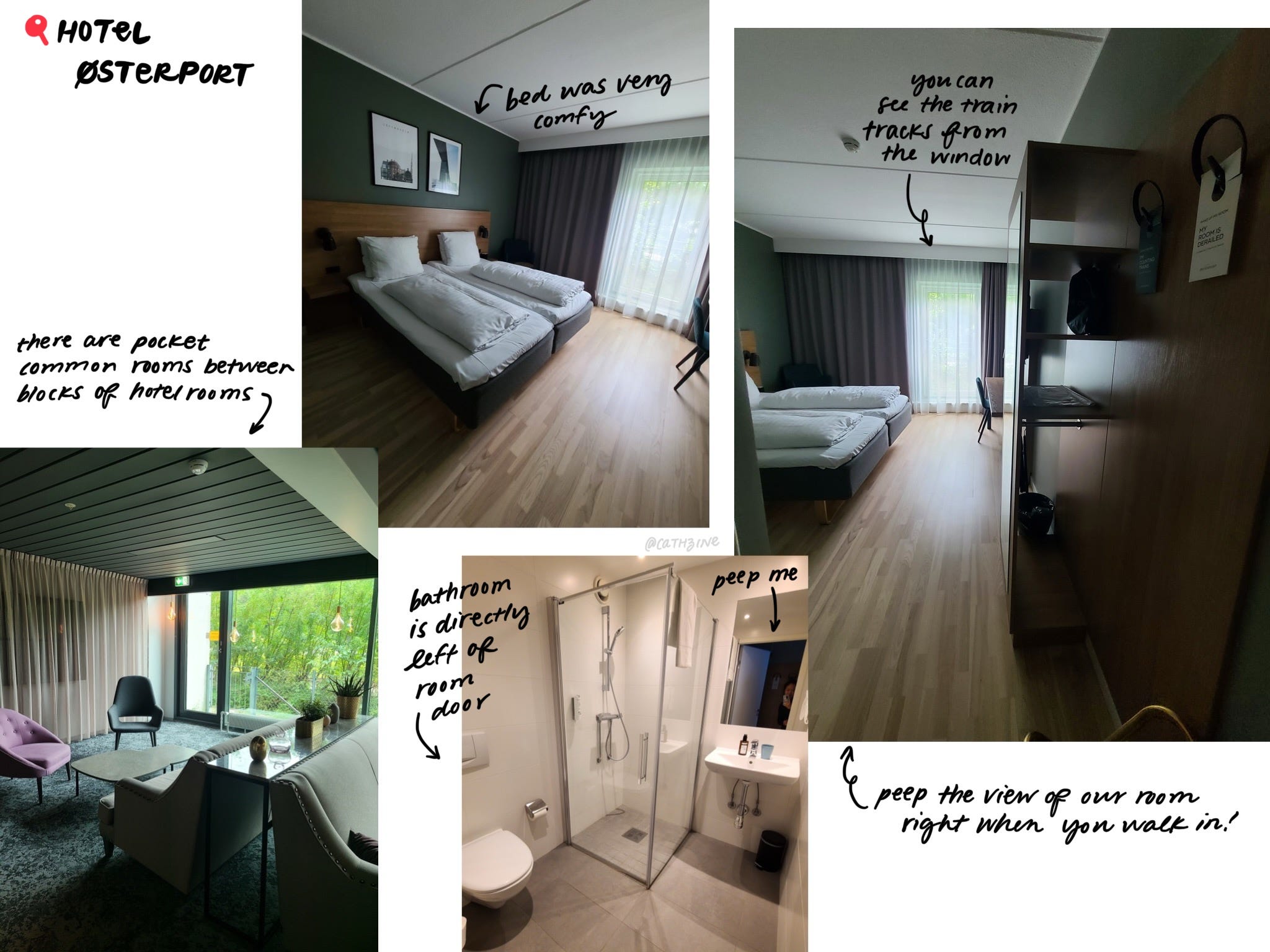
We stayed at Hotel Østerport, address: Oslo Pl. 5, 2100 København, Denmark. The hotel itself is a long rectangle located right next to the DSB Train tracks—it’s essentially just a very long hallway, which I found to be a unique but amusing design choice 😆 Our room was very updated and modern, with a private bathroom, desk space, and armchair. I really enjoyed my overall stay here, especially since it’s so conveniently located next to the metro and train station. A potential con for some—since you’re next to the tracks you do hear the train, but it actually didn’t bother us at all and the hotel provides free earplugs in case you need them.
🛫 flight out of Denmark
On the morning of day 14 was our flight out of Denmark to our friends’ wedding in the Czech Republic. We didn’t do much else besides grab one more bolle med ost in the airport’s Lagkagehuset ❤️
bucket list for next time
Of course, there is so much more to Denmark than what we had time for—here are some other destinations that I just know I’d love to check out:
Near Copenhagen:
Bornholm—an island west of Sjælland known to be a destination to experience nature and hygge. While it’s just off the south coast of Sweden, you can get there via a 35 minute flight from Copenhagen or a ferry from Ystad to Rønne!
Helsingør—(55 minute DSB train from Copenhagen) also known as Elsinore, this is a cute port city on the eastern coast of Denmark with a beautiful 15th-century castle called Kronborg Castle (and a great view of Sweden over the sea)
Hillerød—(55 minute bus ride from Copenhagen) a city with a beautiful 17th-century castle called Frederiksborg Castle (islets and baroque gardens) plus dreamy 19th-century-style streets and Grib Forest to the north!
Louisiana Museum of Modern Art—a world class art museum 55 minutes north of Copenhagen by transit; the photos of the building and exhibitions look beautiful
Møns Klint—also known as the chalk cliffs, this is a nature phenomenon that is located on the south eastern tip of Sjælland and is easiest to get to with a car (~2 hour drive from Copenhagen)
Roskilde—the previous capital of Denmark; this is a quaint old town 30 minutes west of Copenhagen by transit
Near Aarhus:
Mols Bjerge National Park—located in East Jutland, known to have many rare animal and plant species and the ancient ruins of Kalø Castle. This is only a 30-minute drive/~1 hour public transit ride north from Aarhus!
Randers—(30 minute public transit ride north from Aarhus) located in the heart of Jutland, this is an old market town located near a fjord making for a unique town center that blends vibrant shopping and culture with a water landscape
Viborg—an hour transit ride northwest of Aarhus, Viborg is known for its beautiful Cathedral Quarter and the Mønsted Kalkgruber—the world’s largest limestone mine—which you can explore!
Near Funen:
Ærø Island—an hour ferry ride south of Svendborg, its main town, Ærøskøbing, is an 18th-century town known for its idyllic, well-preserved houses that have earned its reputation as “the Fairytale Town”
Northern Denmark:
Aalborg—a city that’s a 1 hour 20 minute drive from Aarhus near the Northern tip of Denmark. Known as the ancient city where Viking ships once sailed and also for its iconic architectural buildings along the waterfront
Skagen—a cozy Danish coastal town that’s a 2 hour 30 minute drive north of Aarhus. Skagen is known for the Radjerg Mile (a massive migrating sand dune), Grenen Sandbar, and lots of white sand beaches with grey seals dotting the coastline
Western Jutland:
Fanø—cute island off the west coast known for its beaches, seals, and dunes; notable towns: Nordby and Sønderho
Ribe—known as Denmark’s oldest town, Ribe is ~2 hour drive west of Aarhus with well-preserved medieval buildings that originate from the age of Vikings. When there, make sure to visit Wadden Sea National Park (UNESCO-listed tidal area) and Vadehavscentret—a 2,800 sq. meter exhibition in the middle of the Wadden Sea National Park
final reflections
It was my first time (1) in a Scandinavian country, (2) in Denmark, and (3) immersed in Danish cuisine and culture—I didn’t have a lot of knowledge prior to the trip and was taking everything in for the first time. Sharing my final thoughts on the trip and lessons learned 👇
takeaways
Trust // One of the first things I noticed in the culture was the amount of trust strangers have in each other and the public systems have in their people. Just a few examples: mothers will oftentimes leave their sleeping child in a stroller outside a café, the metro doesn’t force you to scan your ticket before boarding, and there are a lot of public deer/sheep/goat parks where you have a lot of freedom to interact with the animals.
Intentionality in products and architecture // The whole world knows about Danish design, but walking the streets of Denmark and experiencing how life is there will show you why. Many of the historic buildings are preserved and repurposed (versus torn down and replaced), and you’ll find yourself enjoying the little everyday design elements that make life smoother—like their ergonomic light switches which we had in every hotel/hostel room~
Quality food // Most of the restaurants we patronized prided themselves in using organic ingredients, sourcing local, and serving house made everything—even the smaller mom-and-pop shops in the towns in Funen!
Less people // Maybe it was the time of year, but the cities and towns just didn’t feel overcrowded (with locals nor tourists)—even at popular landmarks like Nyhavn, it wasn’t difficult to get a long enough break in the crowd to get photos
Strong English speakers // Almost everyone you meet will be able to hold a conversation in English (most Danes are required to learn both Danish and English in school) and most restaurants/places/signs/etc. have an English version. It truly is a very tourist-friendly country!
lessons learned
International roaming // Paying for international roaming may seem costly upfront, but it will pay back in dividends. There were multiple moments I wish we had service!
Hotel hopping // Hopping from hotel to hotel every night will wear on you, it’s better to have a homebase where you can leave your luggage versus carrying it around during your sightseeing (re: our Funen Island leg—traveling from Kerteminde to Odense to Svendborg)
Language // Learning some of a country’s language (if you don’t know it already) will make the trip more enjoyable. I usually like to do a little language studying before a trip but for Denmark I just didn’t have any time. There were multiple moments when ordering/interacting with locals where I wish I new some basic phrases and words confidently to communicate pleasantries, or how to pronounce certain letters to make reading easier.
And this wraps up my travel journal from a 13 day trip in Denmark—it felt like a whirlwind yet also a lifetime. This is a destination I’d totally recommend to everyone ❤️ if you’ve been already…